
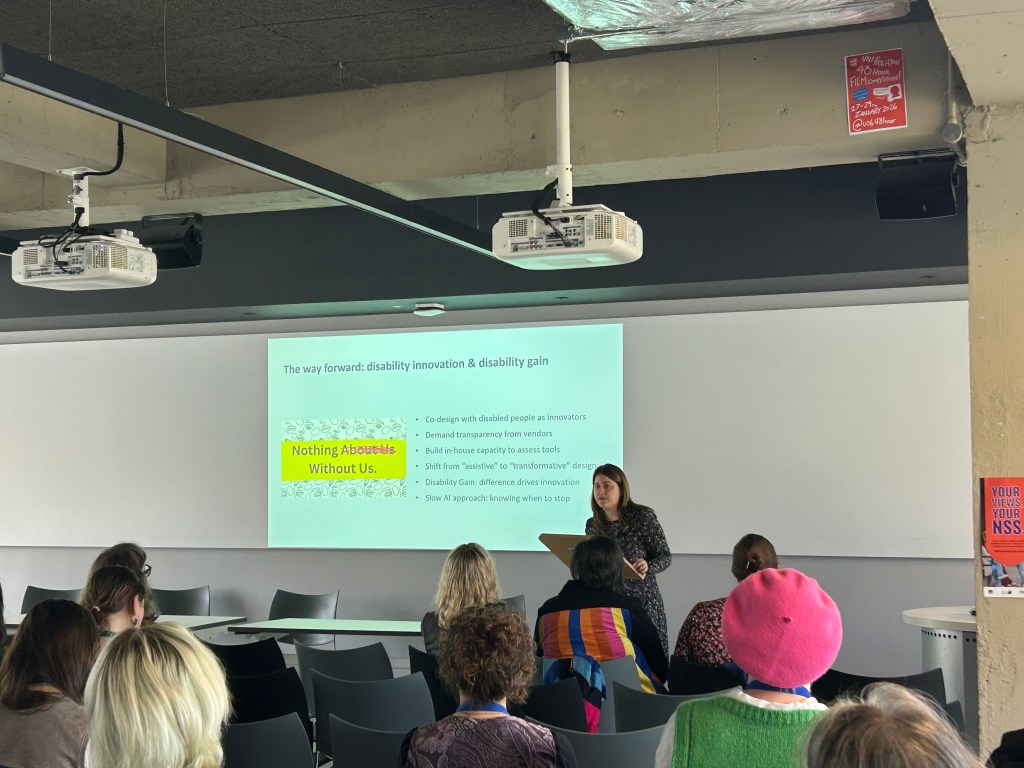
In Brighton, I presented new findings from the pilot survey at the ‘Visiting the Museum: New Perspectives and Future Directions‘ conference at the University of Brighton in April 2026. The conference brought together international scholars and practitioners to rethink the museum visitor through lenses of care, access, and social responsibility, with discussions ranging from inclusive methodologies to the ethical tensions of contemporary museum practice . Within this context, Cecilia’s paper shared more findings around the hopes, expectations, and concerns of disabled visitors regarding the increasing use of AI in museums, highlighting both optimism around accessibility and significant concerns around exclusion from design processes, trust, and accountability.
A key emerging finding from the survey is a growing call to resist and refuse the adoption of AI in museums altogether, particularly in light of its environmental impact and contribution to the climate crisis. These concerns are especially coming from communities that have been historically marginalised, excluded and discriminated against within museum spaces, including Indigenous groups and people of colour, who are increasingly questioning whether AI-led ‘innovation’ reproduces existing inequalities while accelerating ecological harm. These are concerns that resonated across wider conference discussions.
Conference attendees and speakers emphasised that accessibility cannot be separated from broader questions of social and environmental justice, especially given the disproportionate impact of the climate crisis on disabled communities globally. The conference also foregrounded ‘Disability gain’ as a shared and increasingly influential framework, evident in the work of researchers such as Prof. Alison Eardley, Sam Bowen, and Shelby Navone, where disability is positioned as a driver of innovation across museum practice.
These conversations pointed towards a broader commitment to disability justice as part of collective social justice, recognising that while visitor needs may at times be in tension, adopting an intersectional and collaborative approach is essential to building more equitable and responsive cultural institutions.
Check the conference programme here
 Disability Museum AI
Leave a comment